Friday, August 31, 2007

MANNERS AT THE ROYAL TABLE

Proper 17C September 2, 2007


Luke 14:1-14


There was a funeral for an Englishman that lived in the US for most of his adult life, a prizewinner journalist and peace activist. He used to come to the noon service in Spanish, language he mastered. The funeral was not fully formal by any means. However, a good number of people came dressed in black, both men and women. The people in attendance one could say was as in any funeral a mixed bag, but I will be tempted to say that mostly were middle class and educated. At the end of the funeral and interment, there was food and we have to serve it in the yard due to the construction in the parish hall. The weather was perfect, the sun was slowly setting in the horizon, and people were engaged in friendly conversation. When all of the sudden I see, horrors of horrors, the people of the Spanish Alcoholic anonymous emerging from their meeting and going directly to help themselves, somewhat hesitantly, others not so hesitant, of food and drink of this gentleman’s funeral meal.


I was uncomfortable, they did not belong there, there were out of place, chattering loudly in Spanish and mingling with the fury of life with a very different crowd. For a moment, the English group looked upon them with curiosity and surprise, although not for long, they returned to their conversations, elegant, quiet and interesting. While crisscrossed by Hispanics talking to each other not about the meaning of life and death, Bush and Hilary, but about parties to go to, anniversary dinners, others meetings and family problems.

I stepped back to watch, to observe the different reactions, just in a few cases, the boundaries between the two groups were open and exchanges took place, but for most each group although mingled physically, remained separated both socially and culturally. Each of the groups assuming that the other was suffering from some form of social autism and therefore incapable of communicating.


In Driving Miss Daisy, Hoke (Morgan Freeman) the black driver of this Jewish white educator (Jessica Tandy), two social rejects themselves, drives his boss to a dinner offered by the progressive, educated classes of Atlanta to Dr. Martin Luther King Jr. to listen to him speak. Miss Daisy rationalizes why Hoke, the black driver, should stay in the car while she, a white woman, comes in to listen to this leader of the disenfranchised blacks. He surely will feel uncomfortable. He will be out of place. She does it for him, to avoid him trouble.

Very liberal white Canadian theology school classmate of mine, now a priest, invited both Adria and myself to dinner on Thanksgiving, that was our first year in the country and we were not missing anything because we knew nothing of the occasion. By the way, Hispanics in the US call Thanksgiving Turkey Day -El Dia del Pavo- and a story has developed in which a turkey saved the first pilgrims, warning them of an Indian attack. In Thanksgiving, the savior turkey then becomes food, in a Eucharistic way, but I digress. During this very traditional dinner, with pumpkin pie, horseradish, cranberry sauce, stuffing, and gravy.


Back to my liberal white schoolmate, he was lecturing me on things I will need to be in the lookout for during our stay in Canada. He suggested that I should buy plastic boots for winter weather. At this point, his wife interjected and asked him. Will you wear them yourself? That was a rhetorical question, which she answered herself, no, you will not. Then she proceeded to tell me what kind of shoes we would need for the winter, regardless of their price.


We never felt so uncomfortable and hurt, in Cuba, we were second-class citizens because of our faith; we were second-class in Canada because of our social class and ethnic origin. It was the first time –we had arrived in September and Thanksgiving in Canada is the second Monday in October- and it has stayed with us not with resentment, since I realize that, my schoolmate was trying to be helpful while simultaneously not able to help to feel superior.


Teenagers at school live in a constant popularity contest, group exclusion and inclusion is one of the sources of power in an otherwise powerless situation. School divides along clear lines of power, adults are in charge and students are not. Teachers stand, while students sit.

If you find yourself on a bed in a hospital, you have relinquished control to the medical profession, who stands while you try to make sense of what they are saying about you, lying on your back.


Not only we are all in power relationships, but these are also acted out, played out in smaller theatricals units, improvising in the societal microcosm, larger “texts”, and larger politics of exclusion. These rituals not only reinforce but also contain the inherent and obvious inequality on the power balance, helping in its perpetuating.


This morning Gospel is not about good manners at the table, but quite clearly, about the nature of the relationships of power in the Kingdom, in the rulership of God, in God’s government if you like. The table at which Jesus was seated, hostile by all records, he turned into a map of the Kingdom, of the Reign to come, the one we pray for in the Lord’s Prayer, your Kingdom come, your will be done in heaven as on earth.

Theocracy is a bad word this days, and all examples we ever had of it has end up always doing the opposite of they proclaim, does not matter which religion. We religious people have consistently twisted the words of our scriptures to justify violence and policies of exclusion. Richard Dawkins has argued, with historical evidence at his disposal, that religion breeds hatred, because religion by necessity needs to exclude. That is, two truths could not co-exist, either one is correct and the other wrong.


I prefer to talk about the Kingdom, the Reign of God as an eschatological, that is -of the last things-, the end of the world- event that places in the horizon of history and avoids our intervention and therefore our control of its meaning. I become troubled when I hear both right and left speaking of bringing the Kingdom about or hastening its coming. For me it rest in the initiative of God over which we have no control. Jesus spoke of it as eschatological event and as something that erupts among us, which takes places within the cobweb of our relationships.


What we have of the Kingdom is what Jesus preached about, mostly in metaphor and image, escaping the precision of ideas confided to text and liberating it into the world of images, far more flexible and with greater possibilities of sustaining hope.


One of my problems with Dawkins is that he teaches at Oxford, I presume with a good salary, that allows him to ponder meaning and allows him to engage the world without a Utopia, since his paycheck or pension are secured. For two thirds of the population of the world that is not an option. The presumption of Dawkins is that all can be resolved, that the actual root cause of all is the holding of ideas, even in the form of Cartesian clear and distinct concepts. I believe that outside the Eurocentric paradigm that is as foreign as it could be. The embodiment of belief is not simply a textual creed that is subscribed to, but rather a far more complex and rich interaction of ritual, culture and art. I cannot think what will be more helpful to the Market, whose law of offer and demand is one of the few left intact in the post-modern world, that a world without hope. A world was finally –having- is all that matters, and –being- is just a lost memory.


In Israel, the meal table played a very important role, not only in the family, but in society as well. When an Israelite provided a meal for a guest, even a stranger, it assured him not only of the host’s hospitality, but also of his protection.


Also in Israel (as elsewhere), the meal table was closely tied to one’s social standing. “Pecking order” was reflected in the position one held at the table. The meal was one those theatrical instances where power relationships were played out, the meal therefore partook of the policies of exclusion agreed by all.

Let us examine the passage in question today, Jesus is not among friends –leader of the Pharisees- and –watching him closely- will give it away. The parable is said as the result of Him seeing the guest, violating norm, helping themselves to the seats of honor, instead of waiting to be invited to be seated by the host - he noticed how the guests chose the places of honor-. The parable then is rather a not so oblique insult to his table companions, and Jesus does using Scripture Proverbs 25:6-7 advises: “Do not put yourself forward in the king's presence or stand in the place of the great; for it is better to be told, ‘Come up here,’ than to be put lower in the presence of a noble”.


The second portion of the text is mostly advice to the host, in terms of his guest list. In the first portion, he shames the guests, in the second he embarrasses the host. In a way, -you had it coming- by the crowd that you invite, instead of inviting - friends, brothers, relatives or rich neighbors- you ought to invite - the poor, the crippled, the lame, and the blind-. If you notice, the guests offered by Him intentionally are equal in category number to the ones that the host has invited, as no leaving any doubts about his demand for a total replacement.


This was no ordinary meal, this is the Sabbath meal. Meals of this nature were special, were influenced probably by the symposium, a Hellenistic gathering of males, of high upbringing, and educated who gather after a meal to listen and to talk about the arts. Equality of its integrants is very important, through this form of bonding, the Polis was controlled from Homer onward and its influence was widespread in the Mediterranean.

Therefore, it is to this symposium of Pharisees, well versed in Scripture, righteous males, educated and perhaps relatively well off whom Jesus disqualifies and introduces societal scum as the would-be members. It is like Julie inviting the winos of Athena Park to her daughter’s birthday party. What they will be doing there? How could they converse about the Scriptures, politics and society? What they would know? I mean the lame, the blind, and the poor? What would they contribute to this gabfest of the spirit? The symposium will be effectively terminated, ended.


The Kingdom as Jesus conceived it will be -tabula rasa- as flat as the table, where social conventions of exclusion will be ignored, where the purpose of meal sharing is the sharing of people themselves, not what they can contribute, not what they can bring. Whether it is power, riches or intelligentsia.

That the sick, the lame, the blind, the poor are not so because God willed, but rather because we did.

yee sung


yee sung, originally uploaded by lotusutol.

Jesus's wedding Banquet

Antique Festival


Antique Festival, originally uploaded by benthomasrockstar.

This is the the goal set up before the masses, one to aspire to, a wedding banquet without guests

2/12 lunch


2/12 lunch, originally uploaded by Janakay.

This is American society version of the Kigdom Wedding Banquet, one step away from war rations

Saturday, August 25, 2007

I do not know you Luke 13:22-30

The front cover of Time magazine this week present us with a smile-less photo of
"the saint of the gutter" with the title -the secret life of Mother Teresa-. I bet that some people thought this was some saucy expose of the private life of Mother Teresa. I confess to be less of a fan of the nun, now in her way to sainthood, thanks in part to the revelation by one of my professors at University in Canada about an encounter with her in which she behave in what my professor -a nun herself- described as -irrational commandeering attitude- the excellent article by David van Biema is a reflection on the book by the principal advocate for Mother Teresa's cause of beatification The Rev. Brian Kolodiejchuck. The book is called Mother Teresa: Come be my light and will become available in September.

The book is the publication of the would-be saint personal letters to confessors and superiors. For over fifty years she complained bitterly about Jesus absence in her emotional and spiritual life. She felt like a spurned lover. She writes
"Jesus has a very special love for you," she assured Van der Peet [ a spiritual confidant at the time]. "[But] as for me, the silence and the emptiness is so great, that I look and do not see, — Listen and do not hear — the tongue moves [in prayer] but does not speak ... I want you to pray for me — that I let Him have [a] free hand.". As I continued reading the article I kept looking for the scandal that the title seems to promise and increasingly I realized that there was none. The title was made for the American public by some commercially savvy editor but whoever is on a spiritual path knows that doubt and faith are twin sisters. Whoever had a superficial knowledge of the Christian mystics knows that the term "Dark Night of the Soul" came from experience of the 16Th century saint John of the Cross of profoundly arid and unemotional faith journey. Eventually towards the end of the article the writer eventually makes the point that for the mystics, this kind of language was not new.

It is Rene Descartes himself, the father of consistency in western thought who said If you would be a real seeker after truth, it is necessary that at least once in your life you doubt, as far as possible, all things. Mother Teresa seems to have done just that, but if one is to believe the article in Time, she did it most of her professed life as nun, as founder of her order and as a spiritual guru of our time. She lived, not just between doubt and faith liminal as if were, but she was fully on the "dark" side. For some it will be a monumental fiasco, because in today's society we have relegated God to a feeling, something warm here in our hearts that happens from time to time. A personality like her now confesses that for most of her religious life she felt just a terrible and frightening emptiness.

We all know, I think what is like feeling empty, or in the dark, or profoundly lonely. have you ever been in a party full of people, music and food and at the same time feeling incredibly and astonishingly alone?. Have you ever in your life, consider your mistakes and find your life meaningless and without a purpose. That is what people in profound depression claim to feel. For some is just too much. Life without a purpose or meaning for some can lead them to self-destruction. When confronted with pain and suffering of untold proportions, we doubt if there is a good loving God watching over us.

Today's gospel speaks about rejection of Jesus of those who did not aim at the narrow door, the evil doers that will be shoot out of the party of his company, the left out. This is a word of judgement. We want to think that God is nice, I said last Sunday that we in America had confused Nice with Love. We would like, as Ben Franklin did when took all miracles out, edit out all the words of judgement of the Gospel. To take away all the grittiness of the Gospel and turn it into a smooth surface, like God was a lovely Golden Retriever sitting on our lap slobbering when we call Him and away when we shoo Him. God at our beck and call.

Last Sunday we heard Jesus promising not peace but sword, this Sunday we hear him speaking of exclusion. We all know what our narrow door should look like since we have chosen at one time or another chosen to stay way from it and chosen the wide door of sin and falling away from God. There is a bridge built in the middle of a field in Sicily that unites nothing, it just stands there in the middle of a field, no river or road underneath, not two parts in need of union, it is just there, a monument to unscrupulous use of public money. It is called the bridge to nowhere. That is the alternative door to the narrow door, the door to no where, the monument to the pilfering and wasting of our personal lives. This incredible gift that we call life gone down the proverbial drain.

yet even when we feel we have chosen the narrow door, we have been in the straight path, we have turned our lives around, yet the we feel that God ignores us, that Jesus does not respond to us, that feel nothing in out hearts, no warming feeling, no tear, no conviction, no faith. In many ways that was what Mother Teresa confessed to feel in these private letters that now are made public for most of her life as a religious, as care giver of the dying and the poor, for him she took considerable offense in a country like India where Christians are small minority.
The recognition she received was no always universal, specially at the beginning she was antagonized by the Indians themselves, whose traditional dress she adopted as the uniform of her order, it is said that a high caste Indian once saw her begging for money for her "place of death" and spat on while he abused her and she quietly clean herself up and looking at him attentively said, that was for me but do you have something to give for my poor? meanwhile she agitated her collection tin.

This woman, holy by all accounts, felt always rejected by Jesus, left out of the party of his presence, tortured in her very self by doubts, lacerated by the seemingly silence to her prayers.
How come then this small woman of wrinkle face was able to live for fifty whole years getting up at 4:30 am in the morning, spending countless hours praying on her knees, serving the dregs of humanity? The poor of the poor was her mission, the dying who had no one to help them to die with dignity. That was the center of her ministry in Indian Calcutta. She could expect absolutely nothing from these people, who often had no family to look after them in the first place. Nor, she said she got anything form Jesus himself in her life time. No words of encouragement, except when she said, Jesus called her to India to be his light in 1948. After that no other word.

John of the Cross, we mentioned before wrote about this stage in the spiritual progress of any person, when the prayers become just empty words, when the heart does loves no one, when the soul gasps for air of the spirit, when our spirit is permanently hungry for the divine presence, when our intellect is full with questions and no answers. He called it aptly the "Dark Night of the Soul". That spiritual journey where it is eternally 3 am. Arid time, wasted sleep, forecast of a confusing day ahead.
Mother Teresa wasn't "feeling" Christ's love, and she could have shut down. But she was up at 4:30 every morning for Jesus, and still writing to him, "Your happiness is all I want.

A Fr. Larry chaplain at a federal jail receives a group of high schoolers, perhaps brought there for some preventive work, and the young people ask Fr. Larry how many inmates you have turned around? He responds, well it has been 15 years that will be about 6, 000 inmates I have been in contact with, about six I think! Next question. Why you do this? because Jesus told me to, next question.

Why we do the things we do? what sustain each one of us when there is so little to go on. Mother Theresa had nothing to go on except her duty to others even when that duty was not pleasurable or she did not felt motivated. She walked for a dark valley for many many years and yet she continue walking, she could not talk about what she felt with honesty but she knew that her experience or lack of it, will not stop her in serving others, her emotions will not be a deterrent.

She was like Peter in his single mindedness and like him had moments, in her case that lasted a lifetime. She was in forefront of the most terrible poverty, she served the poor of the poor, and she served among these the ones that were dying. What is surprising that she did not had a nervous breakdown yet she continue in her march often questioning herself about where was she going and more importantly what was the purpose of her going.

Her persona, small as it was, has just got bigger for me, even bigger than it was when she died because i can see myself in her struggle. Because sainthood has become available to you and to me and to all of us.

She was no hero, she was a saint, no hero that needed airbrushing dirty facts, but with all the grit of truth in her, no exceptional, but common, one of us, gone to God's heart for ever.

A saint that shows its darkness and emptiness, allowing us through them to see God with clarity, they become like a clean and empty glass. Arid and empty for the love of God, not depending on their feelings or emotions, but depending completely in the Beloved. I thought reading the Time article that she seems always even in her emptiness and darkness to be in relation with other person, one that she could not see or feel, but one that sustained her through her darkness. She has left the games of the mind, the games of the ego, to rely totally and absolutely in God.
Teresa was sustained not by emotions born from within but the a Divine presence borne from without, that was her learning that in sometimes in the absence of God and goodness, one must trust one way or the other, stumbling with the big question in the way, capital HE will bring us home again and again.

Loreena McKennit, who I saw playing her harp in the Saint Lawrence market in Toronto a grey dark day of winter, and now internationally acclaimed singer and composer, reflecting of the John of the Cross's "The Dark Night of the Soul" composed this song where these words come.

Upon a darkened night
the flame of love was burning in my breast
And by a lantern bright
I fled my house while all in quiet rest

Shrouded by the night
and by the secret stair I quickly fled
The veil concealed my eyes
while all within lay quiet as the dead

Chorus
Oh night thou was my guide
oh night more loving than the rising sun
Oh night that joined the lover
to the beloved one
transforming each of them into the other.


Friday, August 24, 2007

how to interpret the present time?


Luke 12:49-56


Jane Austen’s Pride and Prejudice shows us England in the 1700s. It was a stable society. People knew their place in society’s pecking order. People accepted who they were, which was determined by birth. Because of the bartering of money and titles, marriage was the only possible way out of your pre-assigned place. Families were everything and, along with family came their heritage, their own particular history.


The capitalist class was made of emergent successful merchants without a noble history or name. On the other hand, bankrupt nobles may have had more history than money. Stability in society means there is clarity on the rules of engagement. In 18th Century England, there was a cohesive – perhaps even suffocating— web of meaning.


I have said before that we all live within webs of meaning. Values like Pride or Prejudice, Freedom or Homeland are part of that web we have spun and from which we all hang. (Weber/Geertz). On my recent trip to Rome, I was staying in a 16th century palazzo fitted as a hostel for clergy, frequently getting lost in that old quarter of the city. There were churches and trattorias on every corner, and I would read how many times the properties, be that churches, palazzos or hotels changed hands since the 16th century, and the influence needed to do so.


Our webs of meaning are like an old city: they took a considerable amount of time to lie down. Properties have changed hands many times and have been reshaped. The palazzo is now a clergy hostel. The hospital for lepers is now a hotel, though I am not going to tell you the name. The layout makes sense for the locals and appears chaotic to the outsider, just like you who came from orderly subdivisions in suburbia may think when faced with NY City. In order to navigate the old city of Rome, you need a map, or better yet, a GPS giving you directions, or you need to stop and ask. However, a need for internal cohesion amidst the chaos of accumulated meaning is always a necessity, as it is at the same time the opportunity for renewal and rebuilding and creating new in an old city.

I was watching on YouTube a video clip of Tim Lahaye, who co-wrote the Left Behind series of best-selling novels about the end times. There is a movie and a controversial video game. The core belief is that the saved will be taken out to heaven by God -without clothing- in the blink of an eye, regardless of whatever they were doing (piloting a plane, doing surgery, driving a 16 wheeler truck in the highway). The movie, the novel and the video game are all about the tribulations that will be visited upon those who are Left Behind, the unsaved, not necessarily godless criminals, but Joe Blow’s who were not with the program.


He said something that for me is critical. “People need certainty, and I provide that.” The need for certainty, for something that is indisputably right and true, against the other possibilities and variances of meaning that have been at the heart of the humanity since we learned to speak to communicate. Together with language emerged the possibility of deception and lies, and ever since we have been in the search for certainty.


Science – at least after the 17th century, and perhaps until this day – for some provides that element of certainty. For others, especially religious people, the revealed word, especially revealed texts, provide an alternative source for certainty.


There are times when the old city of meaning is flooded with the new. The River Tiber is closed in by the old city in Rome. Buildings have collapsed and new ones are built within the walls of the existing web of meaning. Society’s anxiety for certainty increases. That is how Hitler made it to Power in the 1930's. An educated mass of Germans elected a megalomaniac because they were certain no more.
Today the international networks enabled by the technological revolution are like the River Tiber in Rome. These networks have flooded the American web of meaning and the anxiety for certainty has risen to unprecedented levels. All of our values we have cherished and we inherited from our ancestors are up for grabs. Think of gay marriage: who could have ever thought of it? Or who could have thought, in Jane Austen’s England of the 18th century, that women, commenting after listening to a boring sermon, would have discussed that Hilary Clinton was running for President? A Hilary? President? Running?


In times like these we have to be careful as we choose the maps that will help us navigate the flooded city. All markings are under water and people have no time to explain. We all have become tourists in our own city.

It is easy to use the Bible as a map. It is text, which facilitates our going back to it to check and re-check. I use the Bible here as text, as a cultural artifact in its own right, or you may choose the Word of God and do not mean the text, but the living presence of the Word, the Logos, the Christ to guide us. We may choose to use a map or to use a person.


The same way a map is less than a city, the text of the Bible is less than the person of Christ. A map is a proportional representation of the buildings and streets, while a guide, although more expensive, knows the meaning of each one of them, which trattoria cooks the best carbonara, where Claire of Assisi stayed until her death. A text gives the assurance and respectability of the printed matter; a person requires, on the other hand, the development of a bond of trust.

I am not surprised that the Lahaye novels about the rapture were popular because that is what people is looking for. But our task, my task, is to do what I think is right, even when it is not popular.
Not everything new is good, but not everything new is bad either. The world has transcended those childish dichotomies. I hope it requires new approaches to old questions. In Jane Austen’s novel the role of women as an oppressed and excluded segment of society guarantees “the peace.” But it was more like a peace of the cemeteries, a peace of death, done at the expense of human beings endowed with everything the Creator has given for the well being of the community, just like men.


For England of the 18th century Hilary would be like gay marriage is for us, a novel and dangerous idea that further threatens our web of meaning, our old city. And yes, we may see buildings fall, and a foundational shake may go through our collective spines. The questions is whether the change is life affirming or not.


I know it is difficult to discern even that, especially today for us, since change is the byword of our society. Just like the article in Time magazine, “I Want Latin,” that was written by the Japanese-Irish lapsed Catholic, we may need the soothing whispers of an ancient (only 17th century) language you do not understand to deal with the feeling of being a boat without rudder in the midst of the storm.

I was thinking last night as I agonized (I always do) over my sermon this morning. I am supposed to say something meaningful in 15 minutes about the end of the world, and I came to realize that simply it was an impossible task. At least for me. I will tell you, though, that between me and an otherwise meaningless world stands the person of Jesus, which the text talks about but which the text cannot comprehend fully.


Yes, the world looks in terrible shape. But it has before, you know. Still, I know that always our disaster is the greatest because it is ours.


Jesus in the passage today talks not about bringing peace like the world knows. He talks about bringing peace that is beyond our understanding, a different kind of peace, one that takes the shape of a sword and cuts the bonds that kept people enslaved in the name of cohesion, of meaning, and clarity of understanding. Jesus’ peace is one that furthers, like a wild fire, the displacement of values and commotion of our accepted truths, but it is one that is necessary for the sake of the life-affirming values of the Gospel.


In middle class America, we are very used to a God who must be nice. I was told once in St Leonard’s Church in Toronto to always smile, like I was in a perpetual visit to the dentist. It shows that God who is nice has to have ministers with well-pressed suits who wear a perpetual smile. I heard once in meeting a priest who literally said, “I chose to preach that sermon angrily the week before.” I do not program my feelings that way but I have news for you: God is not nice. Today’s passage does not fit that image of the God sitting in our lap like a Labrador, but one who is roaring like an angry lion.

Our freedom of choice can bring permanent disaster to the world, since we are the only species on the planet capable of killing all life-sustaining systems and we are working at it in earnest. Global warming is just the last one to enter our common awareness. What use is to have atomic bomb shelters, if there is not going to be life worth living? God is angry at how we have abused the bounty he has given us: this world, our own personal lives, the lives of others we have damaged and hurt unnecessarily.


God cannot be nice, because nice is the antithesis of love. God is loving, but not harmless. Nice is deceptive, but Love is real. Nice has invaded our understanding of Love so much that we have to give Love surnames, like Tough Love. God is loving, which also means God is passionate about us, and because he is passionate he sent his Son to die for us a cruel and bloody death on the cross. A “nice” God would not bring Himself to offer his most precious possession, a part of his very own Self, to nasty suffering, pain and death.


We are bringing the end-times on ourselves, on our children and our children’s children, and He is not happy about it. He is not happy about the silences in families that perpetuate the oppression of its members in the name of peace and stability, the peace that covers up and perpetuates abuse. He has not come to bring that kind of peace, a cemetery peace. He has not come to bring that kind of certainty. He did not leave us a book, but He lived a life. He told us not to fear the confusion of the city, for in the midst of havoc you have me as your personal guide. He has come more like a sword to liberate and to challenge and to shake and to consume what is worthless in his fire.


No, God is not nice, God loves you.

Friday, July 20, 2007

I Confess I Want Latin

Luke 10:38-42 http://bible.oremus.org/?ql=51963661


In Time Magazine July 30th, 2007 issue an article by Lisa Takeuchi Cullen appeared with this same title as a response to the cry of the liberal catholics about the Pope freeing the use of the before rationed Tridentine Mass, which of course was in Latin. A photocopy of the article in question will be in the back of the Church for you to pick up. Actually, thank you to the three people who took the three copies of my sermon last week, I was moved, there will be more this week.

So I was curious at this article I Confess I Want Latin. I thought is was going to be humorous rebuke of the papal decision. But I was impressed by its originality and candor. The author is the result of the marriage of an Irish ex-priest and a Japanese Buddhist woman. The offspring of a strictly observant Roman catholic family who with time and maturity kind of fell of the wagon, sort of, but considers herself a progressive Catholic.

I was shocked not only about that but also recently the Pope reinstated a Vatican Council II hidden-somewhere-piece-of-doctrine that says that in non-roman catholic churches the true Church founded by Christ does not subsist fully (as it does in the Roman Church). To say it simply, we all, children of the 16th century Reformation, with all of our different varieties, are ecclesial communities rather than full churches in the Roman sense. Nothing new about that, in fact in the sixties that was considered an improvement from the Council of Trent, the same Council who approved the mass in question, who condemned the Reformation as pure heresy, worthy of the Inquisition's human barbecues, in the name of Jesus.

I was, no, I am shocked about this Pope statements, back in May he also praise the coming of Christianity to Latin America and described the fruit of the cordial encounter as beneficial to local Indians. That raised more than eye brows, among none other that maverick Venezuela's President Hugo Chavez who demanded an apology. The encomienda system which was supposed to be a trusteeship whereby the colonist will receive a group of Indians to educate them in the Christian faith. In exchange for colonist "services" the Indians will pay with their labor working either in the mines or tilling the land. Reality it amount to slavery with a sactimonious excuse. To this day Latin American "Indians" are paying the price of the violence met by the conquistadors in the name of Jesus.

An Iraqi Kurdish woman by the name Banaz Mahmod, 20 years of age, was subjected to the 2-1/2 hour ordeal before she was garroted with a bootlace. The perpetrators were her father and brother and some other associates. The reason for Banaz's "honor killing" was because she had fallen in love with a man other her husband from an arranged marriage when she was 17. This happened in the United Kingdom, in the name of Allah.

When on behalf of organized religion crimes like these were committed and continue to be committed, why then are we surprised that the author of Time's article and indeed many, many other people have chosen to stay away. Why are we surprised that in Ireland in one single year only four priests were ordained. Which begs the question who is going to sing the Tridentine mass in question? and in Latin?. There is not a simple answer to that, indeed their is a host of factors. The introduction of the car and with it the mobility and choice provided to American families. The availability of television and telephone as an alternative both of entertainment and social networking. the sexual revolution of the sixties will be some of the outside social forces contributing. But the church's paralysis in the face of these challenges and outright lack of creativity other than "elevator music" of the seventies and eighties were not a good defense. The author, Lisa Takeuchi Cullen describe her experience of church as she says "There were times I thought I would pass out from boredom. There were times I probably did". And did all in the name of Jesus.

Before I continue, let me say that the Martha and Mary story of this Sunday is one of the famous one, like last Sunday Good Samaritan and because of that, is somewhat beat up. I want to say a few things in terms of biblical scholarship first.

The story places Jesus, a single male, in a house with two single women, one of which owns the house. Some commentators, claim that possibly there were other people in the house because that was usual in Palestine many siblings living under one roof, but that is not what the text informs us. Martha the owner welcomes Jesus in her abode and goes to prepare for her guest according to custom, while her sister Mary sits at the feet of Jesus, in the position of a student listening to an itinerant rabbi, which was not according to custom. Mary is listening, in the wrong room, since parlors were for men and kitchen for women, while Martha scolds disrespectfully a male, a rabbi and a guest. “Lord, do you not care that my sister has left me to do all the work by myself? Tell her then to help me.” telling him what to do. There is as I said a violence and disregard of pre-assigned spaces and roles, gendered as if it were. The whole staging of the story breathes danger and rupture of patriarchal and nomadic tradition. Communication between male and female, when they were not close relatives, was not acceptable, still the case in the Solomon Islands where do you have to pay money if you do, in other places can cost a woman's life. Women were not supposed to become disciples nor they were supposed to scold and boss around a guest rabbi.

In terms of application to modern day Christians, even renown author Barbara Crafton falls for the busyness application when commenting this passage. We could not understand busyness in Palestine 1rst century, simply because our busyness most of the time is borne out of excess of wealth and time. We plan to get busy because our machines, washing machine, dishwasher, PDA-cum-smart-phone save considerable amount of time and we are left so restless by the efficient capitalist mode, we acquire so much speed transferred to us from our machines, we want to emulate them so much, the push our interaction so fast, that we can not conceive doings things at a slower pace. In agricultural Palestine, when you plant you have no choice but to wait and hope that water and sun and the will of God will bring about the seasonal miracle of a plant coming out of a seed. It is in this wating where the yearly cycle of ruin or salvation of subsistence farmers were made.

Busyness in Jesus's Palestine is nothing like our busyness nor Mary's listening has nothing to do with our need for slowing down and become introspective. People in Palestine, like in today's poor nations have to get busy to survive. Martha and Mary for me are study in the powerful and deeper countercultural message of Jesus. Both Martha and Mary equally do what they were not supposed to do, from the start. The whole story is terrible scandalous and defiant of conventional wisdom especially as it has do with gender roles. The story is about patriarchal societies that have defined specific roles for women, fencing out large group as someone inferior and subservient, which are supposed not to be seeing nor heard. And when those boundaries are broken, they should be put back in their places at all cost, even if it requires killing, like in the story of Banaz Mahmod. And let us not get high and mighty vs Islamic societies, we have done and continue to do even worse.

What is surprising is that Jesus engages Martha like an equal and defends Mary in her mischief, he deals with them both as he will do regularly with his male disciples. Correcting behaviour and calling Martha to higher and loftier goals, beyond pans and pots. Telling Martha that things of God are also for women in spite what her father told her, that God is always the better part.

This brings me to our article in Time magazine, Lisa the author explains why she wants the Tridentine Latin mass back: "It almost goes without saying that as a young, progressive-minded American Catholic, I'm at odds with many of the church's rules and with much of its politics", so why Latin, why the old rites and she tells us: "I want to hear Mass sung in a language I don't understand because too often I don't like what I hear in English". I am ambivalent about Lisa Takeuchi piece. She like Mary is on her knees at a literary confessional, then like Martha she is telling this archetypal parish priest her conditions for coming back. She wants to privatize religion, make the church deft and mute, andf stripped to be a ritual society. She says In a world unmoored by violence and uncertainty, there is something deeply soothing about participating in ancient rituals practiced by so many.

On the other hand, I like Lisa because she is what many women both in America and the world would love to be, like Martha telling the church/mosque/synagogue like it is. I may not like what she says, but it could be the start of an interesting inter-generational conversation. She also raises the issue of ancient rites as central and important for this new generation born in a world "unmoored by violence and uncertainty". The fluidity of our social cultural paradigms at the moment (which i suspect will become more so with rapid advance of technology) evokes more sociological approaches to the question of ritual beyond personal preferences as containment of meaning discontinuity, if one is to think of Lisa as representing a general angst in American society.

Clifford Geertz called culture a web of meaning, inherited patterns of our creation from where we hang. Rappaport considered them so powerful as to make us slaves of their pre-established responses, even when our very survival is at stake. Jesus did not hesitate to go against the social mores of his time, have no problem of accusing his own culture of betrayal of God, have no problem breaking barriers when these were in the way of meeting and enabling people, no matter who they may be, to become his disciples, to become lovers of God. Martha and Mary represented just one of those groups. He demanded consistently a stripping away of the layers of rabbinical interpretation when necessary to make God available to common people. People who were illiterate, poor or belonging to groups considered inferior by his own culture. Samaritans, sinners, women, children, sick, poor were welcome to his table.

Lisa, the Eucharist you want sang in Latin is not ordinary meal offered by an ordinary host. This is a meal where all are invited to take part, even those who were not schooled enough to appreciate ritual mambo-jumbo that will soothe their souls in the face of "this unmoored world". For the 3/4 of today's world have lived and died in such a world and for them, the Eucharist as feast for all those rejects called by Jesus to sit with dignity at the Table of the Kingdom must be comprehensible. George Herbert, the great Anglican poet, once pictured himself coming to Communion and feeling uncomfortable by the attention given him, he was uncomfortable because equality at the Table of the Lord has been superseded by cultural understandings of his importance. Precisely, ritual without meaning or significance.

This dinner Table has a name card in every place that says "you are my friend", we are called from isolation into gathering, from loneliness into community. Our host, has set the table, offered Himself as meal and expands his table to include everyone, even those who could not tell Latin and Mandarin apart. He, the Lord of the Eucharistic Table has chosen you and you and you and me to come and sit and dine and have a merry heart. The price pay was very high, since he offered his life on the cross to validate his message of inclusion and healing.

My niece in Cuba, she is about thirty and she had a mastectomy, she said she did it because she wants to look after her children and when she found out that she had a growth in her left breast that turned up to be malignant, she said she did not have to think too much. It make me think of Jesus being the bread that came from heaven and the incredible power and responsibility of nurturing those to whom you have a duty to. How God was able to sacrifice his own self for the salvation of the world. Jesus seemingly feeds us with nothing better than his own self, in the most common but also the ever present at the dinner table "bread". He is the manna that will feed the people of Israel as the walk away from "Egyptian slavery" to the true freedom of the messianic promised land. Paul writing to the Church in Galatia says, quiete rightly:

You are all sons (and daughters) of God through faith in Christ Jesus, for all of you who were baptized into Christ have clothed yourselves with Christ. 28There is neither Jew nor Greek, slave nor free, male nor female, for you are all one in Christ Jesus. 29If you belong to Christ, then you are Abraham's seed, and heirs according to the promise.,


Sunday, July 15, 2007

When He Saw Him

when he saw him

Proper 10C / Ordinary 15C / Pentecost +7 July 15, 2007


Luke 10:25-37 http://bible.oremus.org/?ql=51365308


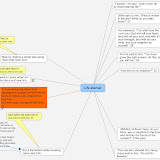
for my mindmanager map: study of this passage click on the thumbnail
Life eternal


Constantly we are seeing things. I do not mean hallucinating, although that could also be true. Our culture is one dominated by images, in the 50’s Television became the honored guest at our fragmented and individualized dinner tables. The family gathered around the TV set to eat and watch at the same time, it was a powerful narcotic. My grandmother used to curse and talk to Fidel Castro every time she saw him, luckily she only met him via TV, otherwise who knows what the consequences could have been.


Nowadays we see images constantly, at work, at home, in church, in leisure, during travel, in the gym and even now on our phones. images, fast changing and abundant, are ever present during every waking moment of our lives. Now we can see far away places, we can find out about the latest piece of news almost when it happens, we can explore both the bottom of the seas and the depth of our bodies.


“A man was going down from Jerusalem to Jericho, and fell into the hands of robbers, who stripped him, beat him, and went away, leaving him half dead.......


I notice an increasing viewing fatigue of sorts, the constant hitting of images has numbed our attention. The first dramatic images by Brian Stewart from the famine in Ethiopia in 1984-1985 hit the airwaves on Nov 1rst 1984, by July 1985 a massive fundraising effort was afoot, Geldof with Live Aid and We are the People raised over 200 million dollars alone and the world mobilized to help. Nowadays, crisis after crisis take place and I do not see the same kind of response. when he saw him, he passed by on the other side


when he saw him, he passed by on the other side

Not around the world, but sometimes right here, on our backyard, we have horrific cases of neglect and abuse. How many children are abused, either sexually or physically by parents, relatives, clergy, teachers, close family friends and in plain sight we refuse to see the tell tale signs of such. How many time we have refused to believe, even parents to their own children. We are so bombarded with images that we are losing the ability to really see, paradoxically for having too much to see. In Denver, Colorado a 7-year-old boy who weighed 34 pounds when he died of starvation was locked inside a closet for days at a time without food, water or access to a toilet. Here in our city, more than once we see images of neglect and abuse, taking place in the eyes of overworked social workers.


when he saw him, passed by on the other side.

This is a difficult passage due to preachers heavy traffic. It is also a passage that has been very idealized and have found currency in our daily conversation. Good Samaritan invokes a very precise image of helping strangers. A sort of Pollyanna kind of charity to the point of losing all its "teeth". It is interesting that similar processes have taken place in our culture with for instances Christmas. But I digress.

when he saw him, passed by on the other side.

This was no innocent seeker questioning, but rather a cleaver ploy to embarrass Jesus in public. The reputation of a rabbi and his income depended on these rhetorical battles. Word-of-mouth was the only advertising tool. Defeating a rabbi was an opportunity to earn reputation, honor. To lose face, to be shamed, was to admit one's own ignorance, since fast answers and logical-traps were not just part of the verbal arsenal but also veritable signs of one's own erudition.


when he saw him, passed by on the other side.

The narrative is divided in three parts. Part A The lawyer's trap. Part B Jesus trap. Part C Application. The question was about what was necessary to access life eternal. The question was not inane, it was part of heated political controversy between parties, since the Sadducee, allies of the Roman occupants, were interested in the now and here while the pharisees, the opposition ultra-orthodox party, believed that life will continue after death. At stake was the soul of the Jewish people and every party battled each other and sometimes themselves.

when he saw him, passed by on the other side.

The quote the lawyer gives to Jesus as answer as per Jesus request is straight from the text of the Law, Deuteronomy and Leviticus specifically, which was considered even before Jesus as summary of all the Law and the Prophets. In order to enter into life eternal (which makes me think that the lawyer perhaps was a Pharisee and not a Sadducee) he quotes such summary. Jesus respond to the lawyer like a master to a disciple: well done and then waits.

The lawyer, perhaps frustrated that he did get him this time, he poses a more tricky question. One that involves interpretation. The question who is your neighbour was not clear for 1rst century Israel as it was perhaps when they all live in tents in the desert. Urban life with its concomitant human density creates paradoxically considerable distrust. Jewish rabbinical tradition tells us that where ever the text is silent, there is room for interpretation.

Part B. Jesus responds with a stereotyped story, a moral fable, in this case a well crafted logical trap and returns with a question to the lawyer who is then the neighbour. That story had only one answer, yet the lawyer refuses to name the character who becomes not the Samaritan but "The one who showed him mercy".

when he saw him, he was moved with pity.

The Samaritans were descendants of a mixed population, occupying the land after the conquest by Assyria in 722 B.C. The enmity between the Jews and the Samaritans was real, long and deadly. So, for Jesus to tell a story that characterized the Samaritan rather than the priest or Levite as the one who proved to be a good neighbor must have been to its first audience a shocking turn in the story, shattering their categories of who are and who are not the people of God.

when he saw him, he was moved with pity.

What do I get today in New York City, on a hot summer Sunday morning out of this. Do I take the homeless home? Do I give money to beggars and junkies? Do I defend someone being attacked in the subway? I think the answer rest deeper in both text and life. I take for granted that you and I will try as humanely possible to help in all sorts of situations that living may bring and I refuse to give you a recipe of what to do. Just remember that love for neighbour is balanced by love for self. That is is Jesus golden rule.

when he saw him, he was moved with pity.

Fred Craddock put it succinctly, "Having right answers does not mean knowing God. Students can make a four-point in the Bible and still miss the point"


Barbara Crafton tells us - Almost everyone thinks that faith involves believing the right thing. Jesus' questioner was a lawyer, one who made his living by defining his terms. He must have thought that faith was like everything else in his life, a matter of getting it right: the right answer, the right conduct, the right opinion. Tell me what's right. I want to know.


But no. It turns out that faith not a secret code of rightness that will unlock the treasure of eternal life. It turns out that faith is a relationship with God and with the world, and that the name of this relationship is love. Again, a lawyer would be frustrated here: Well, what is love? A feeling? An obligation? A decision? He would need some specificity, he felt, in order to understand.


No further explanation was forthcoming. Instead, a story: a man is in serious need of help, and a stranger whose people are at odds with the injured man's people helps him, when his own religious authorities won't. The two are brought together in the story for a moment and then we hear no more -- nothing about eternity, no angels, no voices complimenting the Samaritan on his good behavior. He goes on his way with a promise to come and finish his good work, if need be.

It turns out there's no secret code, no hidden key. There's no need of one: eternal life isn't locked. Anybody can live as a lover of God and neighbor, just by walking out his front door and looking around at what needs to be done. And then doing the first thing that presents itself. And then another. And another. As many as you want -- they're all your neighbors. And the Christ who lives in you also lives in each of them.


when he saw him, he was moved with pity


At the end of the day, we are not going to know God by studying texts, as important as they are, God will not be prisoner of lines of ink on a piece of paper, a popular thought in America, only really available since the invention of the movable types in the 14Th century and the increase in literacy in the following centuries. God always comes to us in lives lived. Embody in persons and their stories, following the paradigm of Jesus, who never wrote anything save for a few scribbles in the sand. But went around nevertheless be profoundly human and as such being very God healing the sick, feeding the hungry, speaking truth

In Nanjing, in 1938, one man stood boldly for the Chinese. John Rabe in Nanjing. The Rape of Nanjing was a horrific massacre in which 300,000 Chinese were brutally tortured and murdered and 20,000 women were raped by the Japanese army. But an equal number were saved through the Nanking Safety Zone. A Presbyterian missionary in Nanjing, W. Plumer Mills, instigated the zone, copying a plan that was begun in Shanghai. Rabe had lived and raised a family in Nanjing for 30 years, and he had no desire to flee as the Japanese occupation approached. The Japanese allowed him to stay, and through his efforts of defiance and bravery he helped to rescue 300,000 Chinese from the Japanese brutality. Author Irish Chang called him the Oskar Schindler of China. Rabe was not only German but the head of the Nazi party in Nanjing.


when he saw him, he was moved with pity

Who is my neighbour?

Saturday, October 28, 2006

What Do We Really Want?

Isaiah 59:(1-4)9-19
Hebrews 5:12-6:1,9-12
Mark 10:46-52
Psalm 13

One astonishing thing in the gospel for today is that when the blind man, Bartimeus, actually comes before Jessus, Jesus does not suppose he knows what Bartimeus desires. Many of us see a person in need and immediately assume that the person wants a problem resolved. Jesus, however, did not think he knew what Bartimeus desired before he himself told Jesus what it was.

Barbara Crafton raises some very good questions from this observation in her periodic e-mailing. Do we see the person, or do we see the disability? Does it not make more sense to see a person, a rich and multi-textured personality, rather than simply what stikes us as the most immediate difference to ourselves? Is it not better to ask a person their own story rather than to make assumptions?

A further consideration is what will Bartimeus do for his living? He is accustomed to sitting on the road to Jerusalem receiving alms from pilgrims who are seeking to please God, and one such way is to give to those who are in need. What will Bartimeus do for a living when he stops receiving this ancient equivalent to a disability check?

If we look at Bartimeus as a metaphor for our lives, do we really want to see? What do we receive from not seeing in our lives? Are we hiding from talents and accomplisments that we have because we cannot accept the good things God has done for us, but determine to remain victims, or to maintain a false image of ourselves? Are we hiding from parts of our lives that are destructive to ourselves or others? We can choose to be blind both in our personal lives, or in our life in society. How do we profit from our blindness? What is the equivalent of our disability check?

I suspect Jesus would not have faulted Bartimeus for not wishing to leave his livelihood behind. Jesus knows our weakness, and I believe that God is very patient with us, gently pulling us towards a greater fulfillment of our lives, though it is also true God sometimes tugs at us in less than gentle ways. More importantly I imagine Jesus was touched again by his faith in desiring healing, a faith he already expressed in calling Jesus, Son of David. Can we also exercise this faith, and express our desire to truly see ourselves, and our society?

God bless,
Father John

Monday, September 25, 2006

TWO PICTURES

Hello All! We are on the verge of getting the internet reconnected to the church office. Then we will be back to our normal level of communication.

WORSHIP: SEPTEMBER 24, 2006
TWO PICTURES

The gospel on Sunday portrays the inner circle of Jesus and his disciples. We have two principal sets of teaching stories in the gospels. One set Jesus is teaching the crowds and his disciples are standing around as support people, or as not that supportive people, saying, "Hey Jesus, it's time to go now." The other set is Jesus with his disciples in their time alone, their quiet time. This Sunday's gospel from Mark 9:30-37 portray two such moments. One is apparently on the road, and the other in the house. We get hints that the cortege of Jesus moving from city to city can be pretty much like a parade. People are talking in groups, and looking, it is possible, very much like any group on a stroll on a country road. When Jesus teaches them again of his impending death and resurrection the disciples do not understand. They do not say anything, perhaps remembering the last time Peter commented on this message, perhaps just in an attempt to save pride. Then when they get to the house, and Jesus asks, "What were you talking about on the road? (the word in Greek is more neutral than the word "argue")", they do not respond because they were discussing who was the greatest, and they had already paid attention enough to know this is an innappropriate question. Jesus takes a child, a person who is both helpless to fend for self, but who is also free to become the person we would like or NOT, and says who ever receives such a child in my name recieves me and receives the one who sent me. Jesus is saying that greatness comes from service, comes from serving those who the world does not consider important or powerful, and that in that process we meet Jesus, and in meeting Jesus God. Service leads us into the presence of God.

The contrasting picture is in the book of Wisdom 1:16ff. This book is attempting to persuade people that belief in an afterlife is essential for proper devotion to God. It is saying life must be looked like from an eternal perspective. It paints the picture of a capable, intelligent person (possibly the Preacher from another biblical book, Ecclesisates) who on seeing that death is inevitable chooses to make the most out of life. While this policy is not necesarily a bad one, in fact I personally would commend it, the author of Wisdom points out that the problem is when this becomes the most important thing in our life. If we attempt to grab as much pleasure out of life before death, thinking death our end, it is very easy to head down a slippery slope leading first to complete self-centeredness, then to downright indifference to others, next to active exploitation of others, and finally to a mockery and even persecution of those who remind us of the values of godly justice, love and responsibility. This picture is one that leads us into further and further alienation from others and God. It is the contrast of what Jesus says the life of service leads toward.

Our desire as a church is to make our life ressemble the picture of service that Jesus points out in the gospel. Certainly parts of our life reflect both the grasping picture of Wisdom and the serving picture of Jesus. Yet in this picture of Jesus with his disciples we see that he patiently teaches and guides them. Jesus is not the controlling person who looks for a "gotcha" moment in order to dismiss you as a person. Jesus patiently teaches and works with his disciples to lead them into the way of service, into a way of life that brings us into relationship with our neighbors, especially the vulnerable ones, into relationship with Jesus and with the one who sent him. It is not by our efforts that we will reach the life of service. It is the power of God leading, guiding, forming us into the divine life of boundless generosity.

Saturday, August 26, 2006

ETERNAL LIFE NOW

I have not enough time to spend blogging,while I am arranging to leave the country, but I just will say that the lessons continue with "eternal life" speech. And it occurs to me that, Jesus although siding witht he pharisees on the topic, his eternal life was tenable during your earthly lifetime, it seems not to be reward after death, but rather something that we cans receive if we partake of his passion (my flesh, my blood) the journey will be long and arid and the only way of surviving it, is by living his life that he shares with us now. Having eternal life now, would have liberate his disciples and us, of the fear of death, which in my opinion is reponsible for many curtailments of the joy of living. One may say, that precisely the fear of death frees people to live life fully, becuase they know they will die. Let have fun now, because we shall die tomorrow. That reminds me of the "Labor will make you free" inscribed on the entrance of the concentration camps in Nazi Germany.

It all depends what kind of life you call the "good life" that you want to live to the fullest.

Saturday, August 19, 2006

POLITICS OF INMORTALITY

During previous weeks I have been talking about the strong (see shellacked mandala or fear and generosity posts) presence of the Exodus story in the gospel passages. Even going back to the feeding of the five thousands, we have seen Jesus re-enacting the Exodus story. I have pondered that Jesus interest in reactivating as if it were such a powerful foundational myth in Israel must also been an important part of his program of re-igniting hope in his audience.

However the exodus of Jesus is not quite the same of the exodus from Egypt, it plays on the historical memory of the people of Israel known as “The Exodus” and it does shares its major motifs and specially its major symbols and breaking points. Like manna, water crossing, feeding. Walking to freedom, passage from state of slavery and scarcity to state of freedom and abundance, to mention a few. But it does it like the one who dyes new hues into old and worn fabric bleached by centuries of fierce sun and heat. He picks up the pattern and repaints a New and quite different Promised Land.

We have talked about that the Israelites of the First century found themselves again “ab intio”, back to square one, slaves and living in scarcity, the problem was they were in Egypt no more, but in the promised land were supposedly they will live in freedom and abundance. There was a dissonance between God promises and reality.

The contractual nature of the relationship of the people of Israel and God, assumed that the people have not fulfilled their side of that bargain and therefore God was off the hook in fulfilling his. There was historical precedence, they had a severe and catastrophic similar covenantal failure when the educate leadership was deported to Babylon. They came back after 500 years, we presume some of them, while others were probably assimilated to Babylonian culture. And joined the locals that were left behind. Similar failure on the covenantal relationships happen when the Northern Kingdom fell to the invader and Israel was reduced to smaller southern portion known as Judah. Jesus and most of his followers were descendants of that disappeared kingdom in the northen part and seen as suspicious by their southern brothers.

Now, at the time of Jesus no one was free, and Jesus audience with some noted Gospel exceptions, were a raggedly riffraff. For this crowd the hope of liberation was not a philosophical or theological musing of the well-fed-ivory-tower-scholars, but a rather more crude, pungent and pressing need. Studies have it that the level of poverty in Israel at the turn of the first century was widespread and deep, as in hand to mouth. It is from this urgency that Jesus frequently scoffs at the Pharisee and Sadducee political parties, who although nationalistic the first and lacayune the second have both failed to provide guidance to the people in such dire times and spent all of their energy in endless arguing of the finer points of the law and the correctness of doctrine.

The Sadducees close to the Romans and the puppet government in Jerusalem did not believe in life eternal and went on to prove that one could derive a clear direction from the text of the law to sustain such believe. For the Sadducees when one died we sleeps in the Lord until and that is that. No wonder they were consumed with “earthly concerns” if they could deal with their meaning in life by succeeding here and now. The pharisees, who scoffed at the Romans for having other religion and being not form the chosen people, believed in the idea that life prolongs itself beyond its physicality. Some of the stories told by Jesus seemed to indicate that he was at least within that group of ideas akin or close to the pharisee party.

Saturday, August 12, 2006

Breast Cancer and Bread that Came from Heaven

I have only dial-up this week and I am afraid I can not blog much. This week I have been looking into getting supplies to my niece in Cuba, she is about thirty and she had a mastectomy, she said she did it because she wants to look after her children and when she found out that she had a growth in her left breast that turned up to be malignant, she said she did not have to think too much. It make me think of Jesus begin the bread that came from heaven and the incredible power and responsibility of nurturing those to whom you have a duty to. She make me think of Jesus, whom Presiding-bishop elect called "Our Mother" in line with the mystics. How God was able to sacrifice his own self for the salvation of the world, the power and responsibility of nurture. Jesus seemingly feeds us with nothing better than his own self, in the most common but also the ever present at the dinner table "bread". He is the manna that will feed the people of Israel as the walk away from "Egyptian slavery" to the true freedom of the messianic promised land. What a feat! Convincing his followers that they were not indeed responsible for the "Egyptian" status they find themselves in the Land of Milk and Honey, but they were put there again by the political and economic class who stole both milk and honey. What Jesus promises though is not an instant solution but a pilgrimage of 40 years in the desert, to break away from internalized slavery and move into freedom. Exodus is what he promises, the promised land is still far away. Reigniting the foundational myth of Israel is his long term goal, and for the long journey he offers himself as "the bread that came form heaven", we can not hoard it because it will be enough for the day -panis cotidianum- of the dominical prayer.

Saturday, August 05, 2006

THE SHELLACKED SAND MANDALA

Luke 9:28-36
http://bible.oremus.org/?passage=Luke+9:28-36&vnum=yes&version=nrsv


I met this man in the north market in Columbus, Ohio, during our 2003 General Convention. The market has just closed and I was looking for a place to eat something light, was like five or six o’clock and this man was manning a stall, actually the only stall open in the market, with his two daughters and an older man besides him. The dress was peculiar because it reminded me of the Old Order of Amish, straw hat, bear, no shoes, plain and rough material shirt. The girls were having a good time playing but their dress was simple, the older man looked very similar in appearance to the younger man, I think in his late thirties. He seemed to be the two little girls father. There was a cell phone on the table and a credit card machine the only two reminders in the whole scene that I was still in USA 2006.

The stuff he was selling were beeswax candles and honey and sweets, I do not remember much. He had some fliers about the wax and the honey and one shabbily printed flyer on the Old Quakers, my mother was a Quaker before becoming a Communist and I engaged him in conversation, he was very pleasant and well read, quoted Plato. He was critical of the modern Quakers that engage in social work or human development in the world as a matter of program ad not as an specific prompting of the inward Christ. The session we had just finished was one of acute arguments over the authority of Scriptures and I asked him to comment.

I must admit that my knowledge of the Society of Friends is very superficial, so I was surprised when he said that there was no way we could really know what Jesus meant or the circumstances in which his sayings were said, he said, I think, that words can never convey a story in full. Therefore they wait upon God to give them the word for this time, that well could be interpretation of Scripture or something totally new.

It was refreshing to see somebody dress like a peasant from before the turn of the century, with the name conservative attached to himself speaking so liberally about the authority of Scripture. The foundation of what he said were not a sign of arrogance but humble understanding and acceptance that words can never contained a whole experience. That is why we have resorted to poetry and the arts in general to provide insights that words cannot efficiently and fully ever provide.

How parents can describe in words how their children looked like when they were born, how they felt, how other people felt and responded to their coming into the world. How to apprehend the entire story in words? Or tape for that matter?.

I think the history of the value of Scripture as the Word of God is tied up to the history of the Reformation, a revolt of the Universities against the ignorance of the clergy at the break of the Renaissance. Not surprising still to this day, in some of the Lutheran denominations, clergy garb is the black academic gown worn by University professors. Luther principle of “sola scriptura” (only scripture) is paired with “sola gratia”(only grace). Interesting that he found a balance between a written and somewhat fixed record of God’s work in the past -Scriptures- and the most fluid and experiential: God’s grace.

The gospel passage of today is one of those beautiful instances in which we need to imagine Scripture. We need to sit and purposely contemplate the Divine and to consider such contemplation sufficient in itself. We need to enhance the text and open ourselves to te experience.

The undertow of the passage is still the ancient story of Exodus. I have said that the whole section of this stories from the rejection at Nazareth, the feeding of the 5,000, the walking on water and the Transfiguration had underneath the ancient and well know story of Exodus. The retelling of which was re-enacted in all Jewish homes during Passover.

The theological problem of the time, could be the fact that the Jews were slaves in Egypt and still remain slaves in the Promised Land, against the promise of the Lord to bring them to a land of milk ad honey, instead they lived in squalor and from hand to mouth. The reconciliation of God’s will with the presence of evil, one of the thorniest issues in Christianity according to conservative Anglican theologian Stott, was most likely also a serious problem in the Israel of the first century.

The Jewish understanding of cause and effect mediated by the contractual nature of their relationship with God will make them believe that they or their ancestors before them were sinners and because of that they will were today neither free or wealthy. Not only they were poor and slaves but their were the only ones to be blame for it. Wonderful idea for the oppressor class to convinced the oppressed that they are the ones to be blamed for their status in life. The complexity and codification of religious practices and their lack of resources and time made the poor sink even further into guilt.

In short the people of Israel were like an abused wife convinced by her abuser that is her clumsiness in ironing or lack of ability in cooking that makes her responsible for her “just” punishment. And here Jesus, in the feeding of the 5,000, or walking on water or being transformed on the Mount is reminding them that is not God’s will their present misery, and that it is certainly man abusing of his free will. He reminds them of the foundational myth of Israel, the story of Exodus so they can break away from the stupor of years of theological abuse and break free again.

The journey with Jesus, was a like a new journey with a new Moses to a new promised land. One that you engage with the essentials for travel, one in which you know yourself to be homeless in the world and recipient of the hospitality of faith. One in which you know that God multiplies scarcity into abundance. One in which God shares his very self in the midst of the storm reassuring us and calming the elements. It is also a journey with God’s endorsement, like when Moses met God and his face shone, Jesus clothes became dazzling white.

Moses came down with the seeds of Scripture, the Ten Commandments tablets, second edition, while Jesus, Elijah and Moses were talking about Jesus impending passion in Jerusalem. The New Law of this New Moses seems not be a catalogue dos and don’ts, but rather an experience, a sacrificial one to boot. One in which the need for a scapegoating and its consequent mimetic violence will be extinguished. So instead of written law, Jesus brings a law written in our hearts.

There are many differences between Jesus and Mohamed, and I will not even to attempt to name them all, but one that is clear to me is that Mohamed wrote a book -Quran- that he claimed inspired by God to the letter, but Jesus on the other hand lived a life and die on the cross for us. The only instance in which we know of Jesus writing was during the forgiving of the adulteress, when he wrote something on the sand.

The stories of Hebrew Scriptures in the present authoritative list were put together by the so-called Council of Jamnia in 90 after Christ and the stories about Jesus we call the Gospels and the rest of the letters and most of the New Testament were not accepted as authoritative until the Council of Constantinople 381 and 397 with the Council of Carthage a council for the local church of North Africa.

I will not question the faith of the early church, which often did have very few patchy pieces of the new scriptures. Even more we do not know exactly how they were consider in the community. What was important for them and for me is that those scriptures said about the One they loved so much that they did not want to offend him, not because of fear of retribution, but rather for fear of facing in solitude a troubled world.

It reminded the story of the sand mandala, a special creation of Tibetan Buddhism - and I am not going to enter into details about it other than to say that is made with colored sand deposited in a highly stylized form. The story goes that a Japanese tourist after taping the building of one he asked to be able to take home to which the monks smiling agreed, and then he proceeded to shellac the whole thing.

Peter’s response to the fleeting apparition of the Divine was to try to fix in time the experience, codifying it -building tabernacles as in the Feast of Booths- understandable human desire of moving from faith to certitude, specially when face with great challenges. It is no different that the desire in some Anglican corners to go back to the law written in stone and abandon the more fragile, exposed and rather fluid law of grace. It is not surprising that most mega-churches are built on the same principles, because people want the certainty of law to face the monumental cultural changes that Americans and most of the affluent North Atlantic Affluent societies are presently facing. To a world in flux we Christians have no to other choice but to get on the boat until we get to our true home. We have no to other choice but to trust God that our present homelessness in the world can only be faced with the hospitality of faith, that we need to do ministry without bling-bling. We have no other choice that be faithful to a God that can convert two fish and five loaves of bread in food enough for many.

We can shellac the Divine presence to take home to join touristic souvenirs but be certain that you will be worshiping an idol not the true and living God. He is my Son, listen to Him

Friday, July 28, 2006

Fear and Generosity

FOR THE LESSONS FOR THIS SUNDAY (BCP LECTIONARY) http://www.io.com/~kellywp/YearB/Pentecost/BProp12.html

Jesus has just fed the multitude with the scarcity of his offering and in the process he has reenacted Exodus. This ritual re-enactment of Exodus retrieves the ancient historical memory, the grand transition from slavery and scarcity to freedom and needlessness [The desert experience was not one of abundance, but of needlessness, they had food and water, they had a purpose and with every day of desert walk another slave-man died and a new freedom was birthed] However, Jews of the first century, specially the am-ha-aretz, people of the earth, found themselves without milk, honey or freedom. The situation of the poor was a desperate one, no wonder Jesus was popular, not only he could heal, but also fed multitudes. The poor in Palestine very well could be wondering what happened with the Lord’s promise? Some seem to have everything and most of the people have barely to eat.

The radical difference between the Exodus promise and the situation of need and oppression of the Israel of the first century has to have an impact on the theological thinking of the day. The cause and effect of Jewish thought would place the burden of the broken promise squarely on the people themselves. If they did not prosper, if they did not have their share of the milk and honey was because they were sinners.

Jesus breaks away from cause and effect and restates the theological question on entirely different premises. He is the new Moses who has come to bring a new Kingdom, a new Promised Land, and invites the multitude to sit in groupings (remaking of the tribes?) while partaking of the messianic banquet, so the feeding has to be seen not as a question of practical expediency (they have nothing to eat and neither we have enough to offer to them and the towns are far away ad it is late) but rather the Jesus response to the theological question of the day, are we the way we are, living as slaves and hungry on the promised land because ourselves or our forefathers sinned? The feeding of all is a response in the negative, all were fed transforming scarcity in needlessness.

There is an interesting phrase in today’s portion “they did not understand about the loaves, but their hearts were hardened” which was the word used for pharaoh’s heart during the Exodus story Ex 7,13 and following. It confirms Jesus’s intentionality offering the messianic banquet that have just taken place.

Again the Exodus motif continues here, crossing a body of water, the different mediums, the disciples on a boat buffeted by the sudden gales of lake Galilee, Jesus walking on water. Moses parted the waters, so Elijah did, while Jesus walked over it. Both Moses and Elijah have to part the waters first and then walk on the dry water bed. Jesus on the other hand was above that. He not only walks on water but he joins them on the boat and calms the storm. For Jesus water was no obstacle, while for Moses and Elijah (the two other guys on the Mount of Transfiguration) it was: it needed to be pushed aside for them to walk. There is implicit claim to divinity here which becomes explicit in the adoration scene on Matthew in the expanded version of this same episode (Matthew 14,33).

Saturday, July 22, 2006

ABUNDANCE AND SCARCITY

Mark 6:30-56 Picnic by the lake alson known as the feeding of the 5,000

bible.oremus.org/?passage=Mark+6:30-56&vnum=yes&version=nrsv


-have you se the back of a computer in many places -maze of cables- computer/monitor/printer is a 3 in one -scanner, fax, copier and printer- video camera and microphone, additional portable hard-disk, USB expander, lamps, palm pilot cradle, voice over IP box, internet bridge, not only that I am messy but also a sign of abundance- I can buy all of those things, while most of the world will be lucky to have electricity

-speaking of electricity, no one know how important is something until you have a shortage of it, that goes for everything in life -in Spanish we have a saying - nadie sabe lo que tiene hasta que lo pierde- no one know what one has until one loss it-

How many things depend on the abundance of resources of this country

Look at our health care. I had a tooth ache in the far away island of Malaita in the Solomon Islands, when I went to Kilofi Hospital for being white I was looked after immediately and quite frankly I had such a tooth ache that I did not care. I recoiled at the look of the dental office, not your Park Avenue dentist, I forgot how medical facilities operate in the Developing World, but the pain was too strong for me to be prissy and the dentist was very efficient and provided me for free with the medications I needed and in a few days my pain was gone.

Healthcare has becoming so expensive because I suspect that pharmaceutical-industry generates and finances a constant stream of studies that justifies the increase use of resources, many of them outright useless at best and mortal at worst. Now Americans are told to get rid of the nasty regular bacteria who has lived thousands of years on kitchens. We are told that we now have to be aseptically clean, almost surgically. And I will say nothing of the chemically managed feelings that we are supposed to have a control off via zoloft and prozac and the like.

Feelings, deeper communications of the soul, heart to heart, face to face, within the reach of someone’s aroma, that come about only and more successfully when there is an abundance of wasted unstructured time, are almost impossible these days. People get home drained of energy, work not only pays better than in Melanesia but also suck up our very soul. In the area of communication we have an abundance, I will call obscene, of mediums for it, and yet increasingly we are trapped in a sort of social autism, unable to break out of ourselves and reach to others. Fear mongering in this era of terrorism and war just comes handy to solidify and reinforced the steel door behind which our souls live in terrifying solitude.

Speaking of war, the katyushkas missiles being dropped on Israel by Hezbollah, literally “The Party of God”, are wreaking death and destruction in the very same area where Jesus over 2,000 years ago asked hungry people to recline on the green grass and taking just five loaves and two fish, and acknowledging where all blessings come from, he looked up to heaven, and blessed and broke the loaves, and gave it to them and he divided the two fish. And all ate and were filled; and they took up twelve baskets full of leftovers of the bread and the fish.


What an irony, the chosen people of God, Israel and the Party of God “Hezbollah”, bombing each other senseless, while the innocent caught in the crossfire are called “unfortunate casualties”. And the setting for so much destruction and death on the Israeli side is where we believe God, acting powerfully as Creator, transformed the scarcity of five loaves of bread and two fish to feed many who were hungry.

Right off the bat, I got to tell you that we are making the world more skeptical when they hear god-speak, and I say we, because specially in the US we have contributed to aggravate and additionally planning to do nothing, it seems, to prevent further deterioration of the situation in the Middle East. So sometimes, let us not be surprised that the world refuses to believe. Here do we have two conflicting views about God or we have the useful manipulation of and by the way blasphemy, of using the name of God, to further a geopolitical agenda? It is hard to separate one form the other, because I think in the historical memory of nations in the area, both politics and religion become undistinguishable.

Who does not know about Exodus? If you bring to mind the Exodus story and read the passage again you will see and find a number of considerable clues that lead me to think of a small scale re-enactment of the exodus story. Crossing of a body of water. God feeding his people -manna and quails then, bread and fish now- the scarcity of it all, the desert place setting, Moses I in the Book of Numbers 27:17 prays to G-d that the wandering people of Israel do not become “like sheep without a shepherd”, Jesus saw them with compassion, because they looked like they could use some direction, some shepherding. The were arranged in groupings like it is described in Exodus 18:25.

Jesus takes the position of a host giving a banquet for his guests.260 The gestures by which Jesus blesses the bread before giving it to the disciples to distribute (v. 41) recall the eucharistic blessing (Mark 14:22), even though the meal itself does not consist of bread and wine. The fact that there were five loaves and the two fish and they amount to seven items should not be overlooked, since the number seven in Judaic tradition stands as the time of God, the Sabbath -remember the disciples went away to rest to a deserted place- was the seventh day of the week, the Jubilee Year, seven year cycles of seven, was also known as the Sabbath of Sabbaths.

The numbers seven and twelve in the narration are not accidental, they were signs posts known by about everybody in Israel that this what was happening was no simple picnic, but it was about God and his people and their legendary journey from the Egypt, land of slavery and oppression to the Promised Land, land of abundance flowing with milk and honey. They were not allowed to keep leftovers in the Exodus story (Exodus 16:21), just what they needed for the day. Jesus on the other hand commands to collect the leftovers from them.


The primary function of the feeding miracle in this section of the Gospel is to demonstrate that the people now have a true shepherd in Jesus. The banquet in the messianic age would repeat the wilderness miracle of yonder.

Land flowing with milk and honey was God’s promise to Israel, to walk the burning sand of the desert, seeking freedom and material wealth. But Jesus audience were probably wondering what had happened with God’s promise. The Temple establishment was willing to explain it away by blaming people for their sins, interiorizing responsibility for their own misfortunes and removing any traces of it from the landowner class, enabling self-aggression through guilt, destroying in their historical memory the liberation implied in Exodus.

For twenty three years I have worked more that my fair share, and me too like the disciples, sometimes did not even have time to eat. We in clericoland have this thing called a sabbatical year every seven and if I succeed raising the funds I will be on my way to Amsterdam, to study at Vrije Universitet. This will be my first sabbatical in twenty three years of ordained ministry. Not a day goes by in which I do not have doubts about the whole idea, or where I prefer to stay home overblowing my own importance for the development of this congregation or I find reason with the kitchen project to stay put. I spend the whole of my seminary education looking after two parishes on the weekends and when I went to Canada I worked as associated priest in two parishes as well. But everyday, at the end of the day, when I feel really tired, tired from within, I realize that I have to do this. So talk to people who are tired about rest and will tell you a story.

Jesus re-enacting the Exodus myth by the Sea of Galilee, indeed a make-believe Red Sea, is reclaiming that foundational story of Israel and resetting it on a context of utopia, hope begetting new time, new Sabbath of rest for the exhausted laborers of Israel, for those whose milk and honey was stolen by the people in charge and who now collaborate with the Roman Empire forcing the poor, who eat from day to day, to pay high taxes to a foreign power that oppress and shames them. No wonder the disciples could not eat! No wondwer the multitudes followed him everywhere he went!

Jesus’s movement was in its peak of popularity. The whole story here is one of abundance and hope. However, lest we forget, when Jesus dies on a cross, he dies alone.

Seven were the years of famine with which God castigated Egypt and seven were the years of abundance